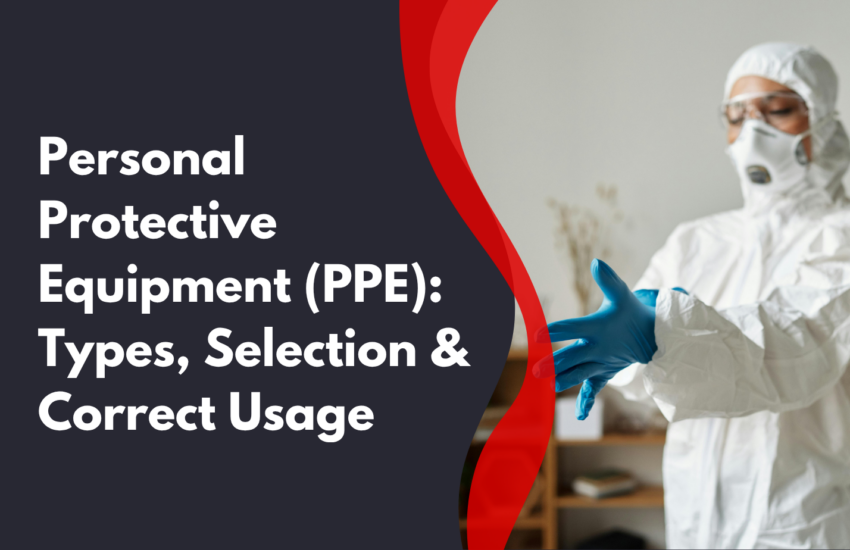
Personal Protective Equipment (PPE): Types, Selection &
Why Proper PPE Selection and Usage Is Essential for Workplace Safety
A hard hat, safety shoes, gloves, goggles, or a respirator may look like basic workplace gear. But on a real worksite, the right Personal Protective Equipment (PPE) can be the difference between a normal working day and a serious injury.
Workers across construction, manufacturing, chemical processing, healthcare, logistics, and other industries face hazards every day. These can include falling objects, chemicals, excessive noise, dust, heat, electrical risks, sharp materials, and biological exposure.
But simply providing PPE is not enough. Workers need the right PPE for the hazard, a proper fit, regular inspection, and practical training on how to use it correctly.
That is what effective PPE safety management is really about.
What Is Personal Protective Equipment (PPE)?
Personal Protective Equipment (PPE) refers to clothing, equipment, or protective devices designed to reduce a worker’s exposure to workplace hazards.
Depending on the job and the type of risk involved, PPE can protect different parts of the body, including:
- Head
- Eyes and face
- Hands
- Feet
- Ears
- Respiratory system
- Body and skin
For example, a construction worker may require a safety helmet, safety shoes, gloves, and high-visibility clothing. A worker handling hazardous chemicals may require chemical-resistant gloves, protective eyewear, protective clothing, and suitable respiratory protection.
The important thing to remember is simple: PPE should not be selected just because it is available. It should be selected according to the actual workplace hazard.
Why Is PPE Important in the Workplace?
Every workplace has its own safety risks. Some hazards are obvious, while others may remain unnoticed until an incident occurs.
Imagine a worker cutting metal. Small particles can travel directly toward the eyes. A worker handling chemicals may be exposed to harmful substances or suffer chemical burns. Someone working around high levels of industrial noise may gradually experience hearing damage without immediately realizing it.
This is why workplace PPE is an important part of a broader safety program.
When a hazard cannot be completely eliminated through engineering controls, safer work practices, or other preventive measures, PPE provides an additional layer of protection between the worker and the hazard.
However, PPE is effective only when it is:
Right for the hazard → Properly fitted → Worn correctly → Inspected regularly → Properly maintained
Ignoring any one of these steps can reduce the level of protection.
Read More: Fire Mock Drills: Importance, Procedure & Best
Types of Personal Protective Equipment
Different workplace hazards require different types of PPE. Selecting the right equipment starts with understanding the specific risk involved.
Head Protection
Safety helmets and hard hats are designed to protect workers from hazards such as falling objects, impact, and certain electrical risks.
They are commonly used at:
- Construction sites
- Manufacturing facilities
- Warehouses
- Industrial plants
- Maintenance areas
A safety helmet should never be considered safe simply because it looks fine from the outside. Cracks, heavy impact, damaged suspension systems, or excessive wear can affect its protective performance.
If a helmet is damaged or has experienced a significant impact, it should be inspected and replaced according to the manufacturer’s instructions and workplace safety procedures.
Eye and Face Protection
The eyes are particularly vulnerable to workplace hazards. Safety glasses, goggles, face shields, and welding helmets are designed for different types of exposure.
Eye and face protection may be required when workers face:
- Flying particles
- Chemical splashes
- Dust
- Sparks
- Welding radiation
- Intense light
- Other hazardous exposures
Ordinary spectacles should not automatically be treated as safety eyewear. They may not provide the coverage or impact protection required for a particular task.
Hand Protection
Workers use their hands for almost every task, making hand protection an important part of workplace safety.
Depending on the job, workers may require:
- Cut-resistant gloves
- Chemical-resistant gloves
- Heat-resistant gloves
- Electrical insulating gloves
- General-purpose protective gloves
There is no single glove that protects against every workplace hazard.
The correct safety gloves should be selected according to the material being handled, the task being performed, and the type of exposure involved.
Foot Protection
Safety footwear helps protect workers from falling objects, sharp materials, slips, electrical hazards, and other workplace risks.
Depending on the work environment, safety shoes may include:
- Protective toe caps
- Slip-resistant soles
- Puncture-resistant midsoles
- Electrical protection
- Other task-specific features
Comfort should also be considered when selecting safety footwear. Workers are more likely to wear PPE correctly when it fits properly and allows them to work comfortably.
Hearing Protection
Long-term exposure to excessive workplace noise can result in permanent hearing damage. In many cases, the damage develops gradually and may not be immediately noticeable.
Common forms of hearing protection include:
- Earplugs
- Earmuffs
These are commonly used in factories, workshops, construction areas, manufacturing facilities, and other high-noise environments.
The type of hearing protection should be selected according to the actual noise exposure and working conditions rather than simply choosing the most convenient option.
Respiratory Protection
Dust, fumes, vapours, gases, and other airborne contaminants can create serious health risks for workers.
Respirators and other forms of respiratory protection can help reduce exposure when they are correctly selected and used.
However, putting on a mask is not enough.
Effective respiratory protection depends on:
- Identifying the airborne hazard
- Selecting suitable respiratory protection
- Ensuring the correct fit
- Following proper usage procedures
- Maintaining and replacing equipment when required
Body Protection
Protective clothing can help protect workers against chemicals, heat, sparks, biological hazards, and other workplace exposures.
Depending on the job, body protection may include:
- Protective coveralls
- Chemical-resistant suits
- Protective aprons
- High-visibility clothing
- Flame-resistant garments
The protective clothing should be appropriate for the specific hazard and the conditions in which the worker will use it.
How to Select the Right PPE for the Workplace
Choosing PPE should not begin with the question, “Which PPE should we purchase?”
It should begin with:
“What hazards are our workers actually exposed to?”
A proper PPE selection process involves several important steps.
Identify the Workplace Hazard
Start with a workplace hazard assessment.
Look at the actual tasks employees perform and identify where injuries, exposure, or harmful contact could occur.
Consider physical, chemical, biological, electrical, noise, heat, and other relevant hazards.
Assess the Level of Risk
Not every hazard presents the same level of risk.
Consider:
- Type of hazard
- Severity of possible injury
- Frequency of exposure
- Duration of exposure
- Number of workers exposed
Occasional exposure to a minor hazard may require different protection from continuous exposure to a serious chemical, electrical, or physical hazard.
Match PPE to the Hazard
The PPE must be suitable for the specific hazard.
For example, a general-purpose glove may not provide adequate protection against certain chemicals, while ordinary safety glasses may not be suitable for high-impact work or chemical splash hazards.
Correct PPE selection starts with understanding the hazard first.
Check the PPE Fit
Even high-quality PPE may fail to provide the intended protection if it does not fit correctly.
PPE should:
- Fit the worker properly
- Allow safe movement
- Remain secure during work
- Not create unnecessary discomfort
- Provide the required level of protection
Where possible, workers should be involved in PPE selection because they are the people who will wear and use the equipment throughout their workday.
Correct PPE Usage: Why Proper Training Matters
Providing PPE is only half the job.
Workers need to understand why PPE is required, when it must be worn, how it should be worn, and what to do if it becomes damaged.
For example, safety goggles pushed onto the forehead do not protect the eyes. A badly adjusted helmet may not provide the intended protection. Damaged gloves can expose the hands to the very hazard they are supposed to protect against.
Before starting work, workers should ask:
- Is this the correct PPE for the task?
- Is it clean and undamaged?
- Does it fit properly?
- Am I wearing it correctly?
- Is it suitable for the specific hazard?
- Has it been stored properly after use?
A few seconds spent checking PPE can help prevent a small mistake from becoming a serious incident.
PPE Inspection, Cleaning and Maintenance
PPE does not last forever.
Regular PPE inspection and maintenance are essential to ensure protective equipment remains suitable for use.
Workers and supervisors should look for:
- Cracks and tears
- Damaged lenses
- Worn-out straps
- Broken components
- Contamination
- Excessive wear
- Other signs of damage
When Should Damaged PPE Be Replaced?
Damaged or unsuitable PPE should be removed from service and replaced according to workplace procedures and the manufacturer’s recommendations.
PPE should also be cleaned and stored correctly to prevent contamination, deterioration, or unnecessary damage between uses.
Regular inspections help ensure that PPE remains ready to perform when workers actually need it.
Common PPE Mistakes Workers Should Avoid
Even when the right PPE is available, incorrect use can reduce its effectiveness.
Using the Wrong PPE
Protective equipment may look appropriate but may not provide protection against the specific hazard.
Wearing Poorly Fitted PPE
PPE that is too loose, too tight, or incorrectly adjusted may not provide adequate protection.
Using Damaged PPE
A cracked helmet, torn glove, damaged safety shoe, or scratched protective lens should not be treated as acceptable simply because a replacement is not immediately available.
Removing PPE During the Task
PPE should be worn whenever the relevant hazard is present. Workers should not remove protective equipment simply because the task appears safe for a moment.
Ignoring PPE Training
Workers need to understand how their PPE works, how to wear it, its limitations, and when it needs to be replaced.
PPE Should Not Be the Only Workplace Safety Measure
PPE is important, but it should not be treated as the first or only solution to a workplace hazard.
A strong workplace safety program aims to eliminate or control hazards wherever possible through measures such as:
- Hazard elimination
- Engineering controls
- Machine guarding
- Ventilation
- Isolation
- Safer work procedures
- Administrative controls
- Employee training
PPE is generally considered an important last line of defence when risks remain after other controls have been considered.
For example, if a machine creates a dangerous exposure, simply giving workers PPE does not make the machine itself safe. The hazard should be controlled at its source wherever reasonably possible.
How to Build a Strong PPE Safety Culture
A safer workplace is created when PPE becomes part of everyday safety—not just another item on a compliance checklist.
Managers and supervisors should lead by example. Workers should receive practical training and have access to suitable PPE.
Organizations can strengthen PPE awareness through:
- Regular toolbox talks
- PPE demonstrations
- Workplace safety inspections
- Practical safety training
- Hazard awareness sessions
- Regular PPE checks
- Proper reporting of damaged equipment
Workers should also feel comfortable reporting PPE that is damaged, uncomfortable, unsuitable, or difficult to use.
The goal is not simply to make employees wear PPE.
The goal is to help them understand why it matters.
PPE Training: Turning Equipment Into Effective Protection
Good PPE training should go beyond explaining the names of different safety equipment.
Workers should learn how to:
- Identify common workplace hazards.
- Select the appropriate PPE.
- Check PPE before use.
- Wear and adjust PPE correctly.
- Clean and store PPE properly.
- Identify damaged or defective equipment.
- Understand the limitations of PPE.
- Report PPE-related concerns.
Practical demonstrations can make this training much more effective because workers can see and practice the correct procedures instead of simply reading about them.
Final Thoughts on Personal Protective Equipment
Personal Protective Equipment plays an important role in protecting workers from workplace hazards. But effective PPE safety is about much more than purchasing helmets, gloves, goggles, safety shoes, or respirators.
The process is straightforward:
Identify the hazard.
Choose the right PPE.
Make sure it fits.
Train the worker.
Inspect it regularly.
Use it correctly.
When these practices become part of everyday workplace safety culture, PPE becomes more than protective equipment. It becomes a practical habit that helps prevent injuries and protect the people who keep businesses running.
For organizations looking to strengthen their workplace safety practices, professional industrial safety training and practical PPE awareness programs can help employees understand hazards, make safer decisions, and use protective equipment correctly.
A safer workplace starts with understanding the risk—and knowing how to control it.
Frequently Asked Questions About PPE
What does PPE stand for?
PPE stands for Personal Protective Equipment. It includes protective clothing and equipment designed to reduce a worker’s exposure to workplace hazards.
What are the main types of PPE?
The main types include head protection, eye and face protection, hand protection, foot protection, hearing protection, respiratory protection, and body protection.
Why is PPE important in the workplace?
PPE provides an additional layer of protection against workplace hazards that cannot be completely eliminated or controlled through other safety measures.
How do you select the right PPE?
The right PPE should be selected based on the specific workplace hazard, level and duration of exposure, task requirements, and proper fit.
How often should PPE be inspected?
PPE should be checked before use and inspected regularly according to the organization’s safety procedures, manufacturer’s instructions, and the type of equipment involved.
Is PPE the first step in workplace safety?
No. Hazards should be eliminated or controlled wherever reasonably possible through engineering, administrative, and other preventive measures. PPE provides an important additional layer of protection when risks remain.