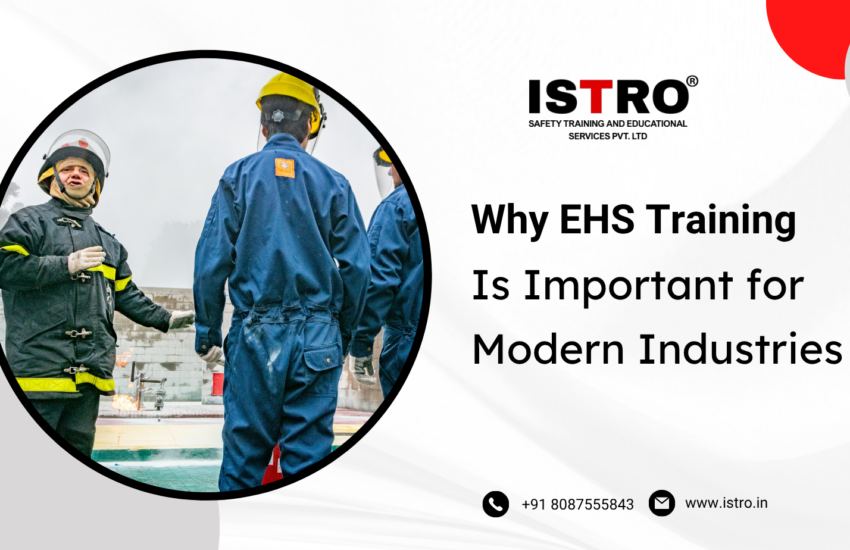
Why EHS Training Is Important for Modern
A single safety lapse on a factory floor can cost a life, disrupt operations, or result in costly legal consequences. This is why EHS training is no longer just a compliance requirement—it has become an essential part of modern industrial operations.
Environmental, Health, and Safety (EHS) training helps employees understand workplace hazards, emergency procedures, safe equipment handling, environmental responsibilities, and regulatory requirements. As industries become more automated and complex, effective industrial EHS training plays a critical role in protecting employees and maintaining safe, productive workplaces.
In this blog, let’s explore why EHS training is important for modern industries, its key benefits, and how it contributes to long-term business success.
What Is EHS Training?
EHS stands for Environmental, Health, and Safety. EHS training is designed to educate employees, supervisors, and managers about workplace hazards and the procedures required to prevent accidents, injuries, environmental damage, and other risks.
Depending on the industry, EHS training may cover:
- Workplace hazard identification
- Fire and emergency safety
- Personal Protective Equipment (PPE)
- Chemical handling and storage
- Electrical safety
- Machine and equipment safety
- Emergency response procedures
- Occupational health and safety
- Waste management
- Environmental compliance
- Risk assessment and prevention
A well-planned EHS training program helps organizations create safer workplaces while supporting regulatory and operational requirements.
Why Is EHS Training Important for Modern Industries?
Modern industries operate with complex machinery, chemicals, automated systems, electrical equipment, and other potential hazards. Proper workplace safety training ensures that employees understand these risks and know how to respond appropriately.
Here are some of the major benefits of EHS training for industries.
1. Protecting Workers From Preventable Hazards
Industrial workplaces can involve several hazards, including machinery accidents, chemical exposure, fire, electrical faults, slips, falls, and other occupational risks.
Many workplace incidents can be prevented through proper awareness and training.
Developing Hazard Recognition Skills
Effective EHS training teaches employees how to identify potential hazards before they result in an incident.
Employees can learn to recognize situations such as:
- Damaged electrical wiring
- Improper chemical storage
- Blocked emergency exits
- Unsafe machinery operation
- Missing or incorrect PPE
- Unsafe working conditions
Early hazard identification allows employees and supervisors to take corrective action before an accident occurs.
Reducing Human Error
Human error is a significant factor in many workplace incidents. Industrial safety training reinforces safe working procedures and helps employees understand how to perform potentially hazardous tasks correctly.
Training may include:
- Lockout/Tagout procedures
- Correct PPE usage
- Safe lifting techniques
- Machine operating procedures
- Chemical handling procedures
- Emergency response protocols
Regular training helps employees follow safety procedures consistently.
2. Supporting Regulatory Compliance
Compliance is another major reason why EHS training is important for industries.
Industrial organizations in India may need to comply with various occupational safety, factory, environmental, and industry-specific requirements. Depending on the industry and activity, organizations may need to follow applicable requirements under relevant central and state regulations.
EHS training helps employees understand their responsibilities and supports organizations in maintaining safer and more compliant operations.
Avoiding Penalties and Operational Disruptions
Failure to meet applicable safety and compliance requirements can expose organizations to financial penalties, legal complications, operational disruption, and reputational damage.
Investing in appropriate EHS training programs can help businesses identify compliance gaps and strengthen their safety practices.
Staying Prepared for Audits
Organizations with properly maintained training records, certifications, risk assessments, and safety procedures are better prepared for audits and inspections.
Regular training also demonstrates that workplace safety is an ongoing organizational priority rather than a one-time activity.
3. Reducing Workplace Accidents and Financial Losses
Workplace accidents can create significant direct and indirect costs for businesses.
These may include:
- Medical and compensation expenses
- Equipment and property damage
- Production downtime
- Investigation costs
- Legal expenses
- Insurance claims
- Loss of employee productivity
- Damage to company reputation
A strong EHS management system supported by regular training can help reduce exposure to these risks.
Minimizing Production Downtime
A serious workplace incident can interrupt production and affect delivery schedules.
Employees who understand safe operating procedures are better prepared to identify hazards, follow preventive measures, and respond appropriately during emergencies.
Reducing Liability Risks
Consistent employee training, documented procedures, and proper safety practices can help organizations demonstrate that reasonable measures have been taken to protect employees and manage workplace risks.
4. Building a Strong Workplace Safety Culture
EHS training should not be limited to completing mandatory courses or checking compliance boxes. Its long-term objective should be to develop a culture of safety.
Moving From Compliance to Safety Ownership
When employees understand why safety procedures matter, they are more likely to take personal responsibility for maintaining a safe workplace.
Instead of simply following instructions, employees can become more proactive by:
- Reporting hazards
- Following safe work procedures
- Using PPE correctly
- Participating in safety drills
- Supporting coworkers
- Suggesting safety improvements
This creates a workplace where safety becomes part of everyday operations.
Leadership Plays an Important Role
Safety culture starts at the top.
Managers and supervisors should participate in safety initiatives and follow the same standards expected from employees. Leadership involvement shows that workplace safety is a shared responsibility across the organization.
5. Preparing Employees for Modern Industrial Risks
Industrial technology is evolving rapidly. Automation, robotics, advanced machinery, digital systems, and complex production processes are changing the way people work.
As technology changes, workplace risks can change as well.
Keeping Up With Automation and New Technology
Employees working around automated equipment and robotics need appropriate training to understand:
- Machine operating procedures
- Restricted and hazardous areas
- Emergency shutdown procedures
- Human-machine interaction
- Safety sensors and warning systems
- Maintenance safety procedures
Regular EHS training helps organizations update employee knowledge as technology and processes evolve.
Addressing Environmental Responsibilities
Modern EHS programs go beyond employee safety.
Environmental responsibilities can include:
- Waste management
- Hazardous waste handling
- Emission control
- Resource conservation
- Pollution prevention
- Sustainable workplace practices
Environmental training helps employees understand how their daily activities can affect the environment and the organization’s compliance responsibilities.
6. Improving Employee Confidence and Productivity
Employees who receive proper safety training are more likely to understand workplace risks and feel confident performing their responsibilities.
When employees know how to operate equipment safely, respond to emergencies, and report hazards, uncertainty and avoidable mistakes can be reduced.
A safer workplace can contribute to:
- Better employee morale
- Improved productivity
- Greater confidence
- Fewer disruptions
- Better teamwork
- Stronger employee engagement
Therefore, EHS training for employees can contribute to both safety performance and operational efficiency.
7. Strengthening Business Reputation and Client Trust
Safety performance can influence how customers, business partners, contractors, and employees perceive an organization.
In industries such as construction, manufacturing, energy, engineering, and infrastructure, clients may evaluate a company’s safety practices before entering into a business relationship.
Supporting Business Opportunities
A well-documented safety and training framework can help organizations demonstrate their commitment to workplace safety when participating in tenders, vendor evaluations, audits, and industrial contracts.
Strong safety credentials can therefore become a competitive advantage.
Improving Employee Retention
Employees want to work in environments where their safety is taken seriously.
Organizations that invest in workplace health and safety training can demonstrate that employee well-being is an important business priority. This can contribute to stronger morale and employee retention.
8. Preparing Employees for Emergency Situations
One of the most important objectives of EHS training is preparing employees to respond effectively when an emergency occurs.
Training can cover scenarios such as:
- Fire emergencies
- Chemical spills
- Electrical accidents
- Workplace injuries
- Equipment failures
- Evacuation procedures
- Natural disasters
Regular emergency drills and practical training help employees understand what actions to take during a crisis.
Key Benefits of EHS Training for Industries
A structured industrial EHS training program can provide several benefits:
| Benefit | Impact |
|---|---|
| Hazard identification | Helps employees recognize risks early |
| Accident prevention | Reduces exposure to workplace hazards |
| Regulatory awareness | Supports compliance requirements |
| Emergency preparedness | Improves response during incidents |
| Safety culture | Encourages shared safety responsibility |
| Environmental awareness | Promotes responsible workplace practices |
| Employee confidence | Helps workers perform tasks safely |
| Business continuity | Helps reduce operational disruptions |
| Reputation | Demonstrates commitment to safety |
How to Build an Effective EHS Training Program
For EHS training to deliver meaningful results, organizations should make it an ongoing process rather than a one-time activity.
An effective program should include:
1. Identify Workplace Hazards
Conduct regular hazard identification and risk assessments to understand the specific risks employees face.
2. Provide Role-Based Training
Training should be relevant to an employee’s job responsibilities, work environment, and level of risk.
3. Include Practical Training
Classroom learning should be supported by practical demonstrations, emergency drills, equipment training, and real-world scenarios wherever appropriate.
4. Conduct Regular Refresher Training
Safety knowledge can decline over time. Refresher training helps employees stay updated on procedures, equipment, regulations, and organizational policies.
5. Measure Training Effectiveness
Organizations should monitor training completion, safety observations, incident trends, employee feedback, and other relevant indicators to determine whether training is achieving its objectives.
Conclusion
EHS training is important for modern industries because it protects employees, supports safer operations, strengthens compliance, and helps organizations prepare for workplace risks.
As industrial environments become more complex, companies cannot rely solely on equipment, policies, or warning signs to maintain safety. Employees need the knowledge and practical skills to recognize hazards, prevent incidents, and respond effectively during emergencies.
For organizations, EHS training should therefore be viewed as a long-term investment in people, safety, compliance, and business continuity.
If you are looking to build your knowledge and develop a career in environmental, health, and safety management, explore professional EHS and industrial safety training programs designed to prepare learners for real-world workplace environments.
Ready to strengthen your EHS and industrial safety skills? Explore ISTRO’s professional safety training programs and take the next step toward a career in workplace safety.
